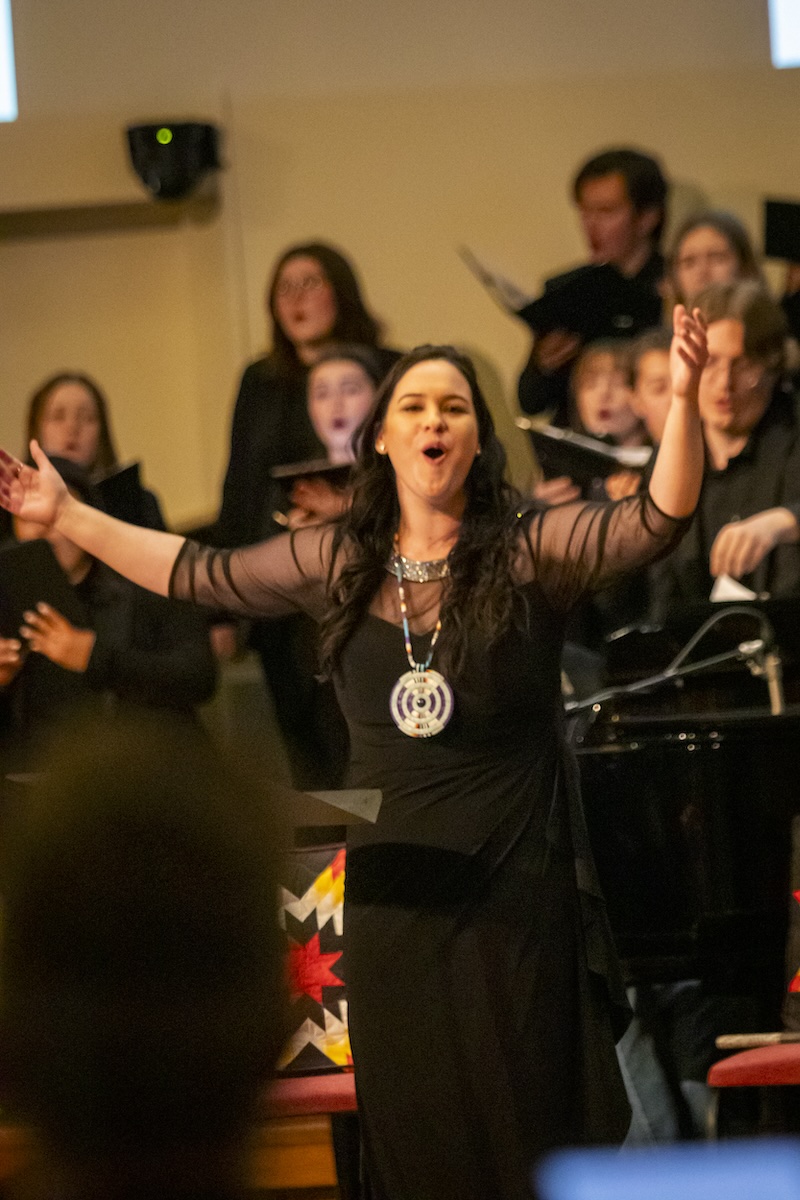
Conductor, Educator, Researcher, Clinician, and Speaker
Dr. Mary Young
A native of Rochester, NY, Mary conducts high school, community, church, collegiate, and children's choirs. She holds degrees in Piano Performance, and Choral Conducting, and is passionate about celebrating and incorporating Native American music in her work. She founded the First Nations Choral Festival in 2024, is co-editor of Hinshaw's Native American Choral Series, and enjoys working closely with Native composers and languages.


Native American Choral Series
The Native American Choral Series is a collection of music composed and/or arranged by Native American composers. Some pieces were sung by specific tribes during the Trail of Tears, while others are arrangements of traditional songs or original works by contemporary Native artists. Although Native American history is rich with stories of resilience and adaptability amid diversity, the use of Native languages has declined for generations. One goal of this series is to help keep these languages alive through song. Another goal is to highlight underrepresented Native American composers, providing them a platform to create and freely use their languages.
The aim is not only to share and preserve languages but also to elevate choral music. Most early Native music was not notated and passed down aurally from generation to generation; this series can serve as a curator of notated Native music, ensuring that it endures and is enjoyed by all.
Co-edited by Mary Young and James E. Green, this groundbreaking initiative celebrates and prioritizes the work of culture bearers with authentic connections to their communities.
New York Choral Consortium Choral Resource
Dr. Young created two outstanding repertoire resources for NYCC: 1) She has expanded and updated Dr. Garrett's "Beyond Elijah Rock" composer and repertoire list; and 2) She has started building a repertoire list (complete with links to composer bios and websites, perusal scores, and more!) of choral music by Native American composers.

Blood Quantum and the White Gatekeeping of Native American Social Identity
The government's definition of "Native American" has changed over the years. The stipulations of "blood quantum" or "federal recognition" have been shaped by whites in effort to ensure their control and position as judges of Native identity.
Cultural Appropriation and How to Recognize It
How do we know if a piece of cultural music is "authentic"? Musical quality, cultural authenticity, and artist reputation are key considerations.
Copyright © {2026} Dr. Mary Young